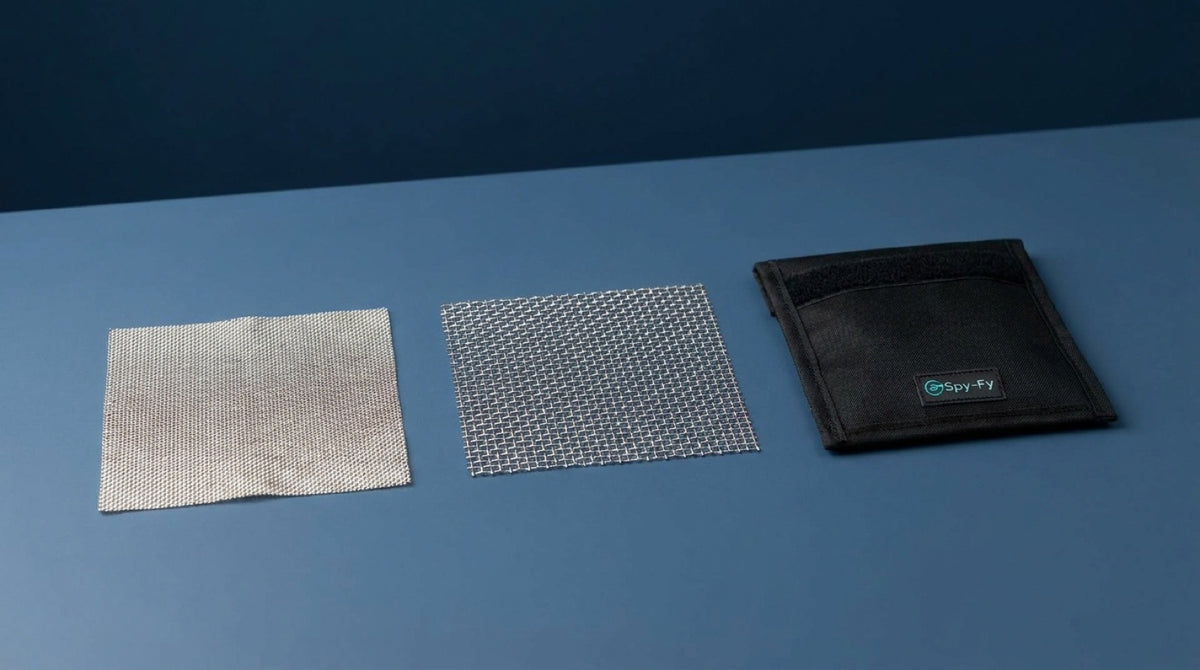
A Faraday backpack is a bag with radio-frequency shielding fabric sewn into one or more compartments, so any device sealed inside loses cellular, Wi-Fi, Bluetooth, Global Positioning System (GPS) and near field communication (NFC, the short-range radio behind contactless payments) contact with the outside world. It is the largest and most expensive member of a product family that also includes sleeves, rigid cases and blankets. The shielding physics is identical in all four. What differs is capacity, price, and how much of the product is actually lined.
This comparison is written for people who buy these products for work rather than for prepping: executives carrying client data through airports, journalists meeting sources who cannot be located afterward, attorneys protecting privileged material on a laptop, and anyone who parks a keyless car on a public street. Each of those threat models points to a different format, and only one of them really calls for a backpack.
Below is an honest breakdown of what each form factor does well, what the marketing claims mean, and where every shielded product leaks. If you want the short version first: most readers are better served by a lab-tested Faraday bag for a phone, tablet or laptop than by a three-hundred-dollar Faraday backpack.
What a Faraday backpack is and what it blocks
A Faraday backpack works as a Faraday cage. A conductive mesh woven into the lining absorbs and reflects incoming and outgoing radio waves, so the device inside cannot reach a tower, a router, a satellite or a reader. It blocks cellular traffic including 5G, Wi-Fi on 2.4 and 5 GHz, Bluetooth, GPS reception, and 13.56 MHz radio frequency identification (RFID) and NFC skimming, while 125 kHz low-frequency access badges stay readable. The block lasts exactly as long as the bag stays fully sealed.
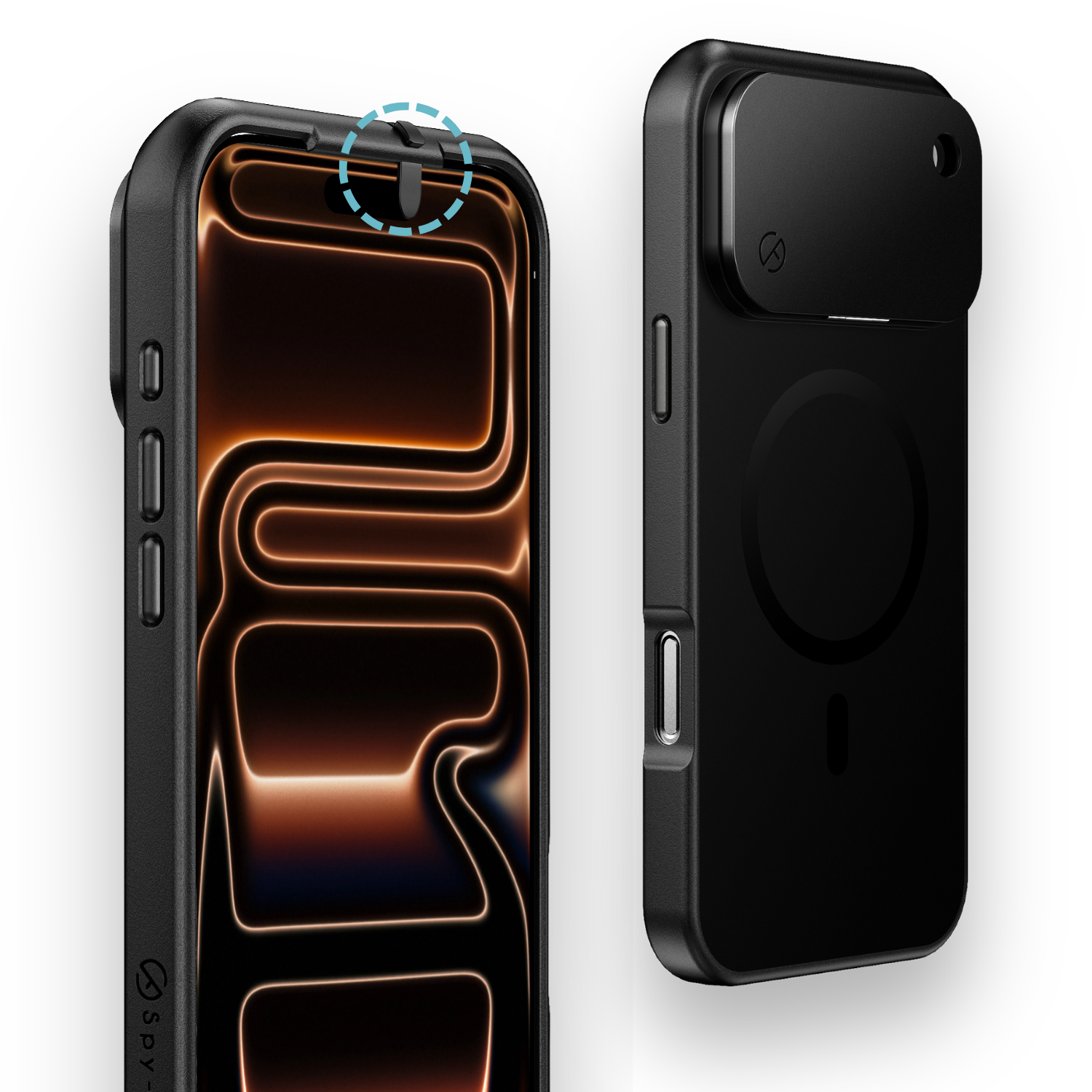
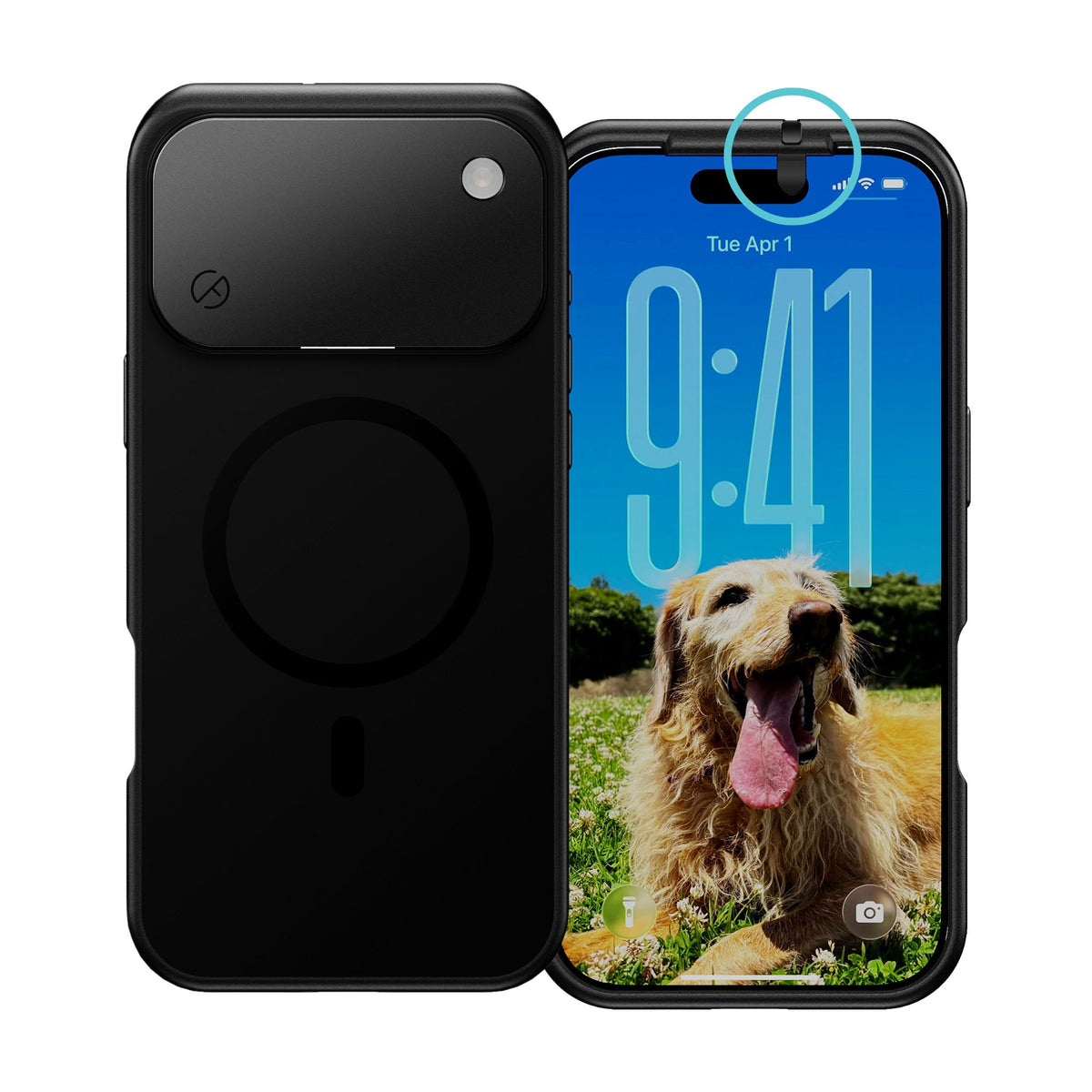
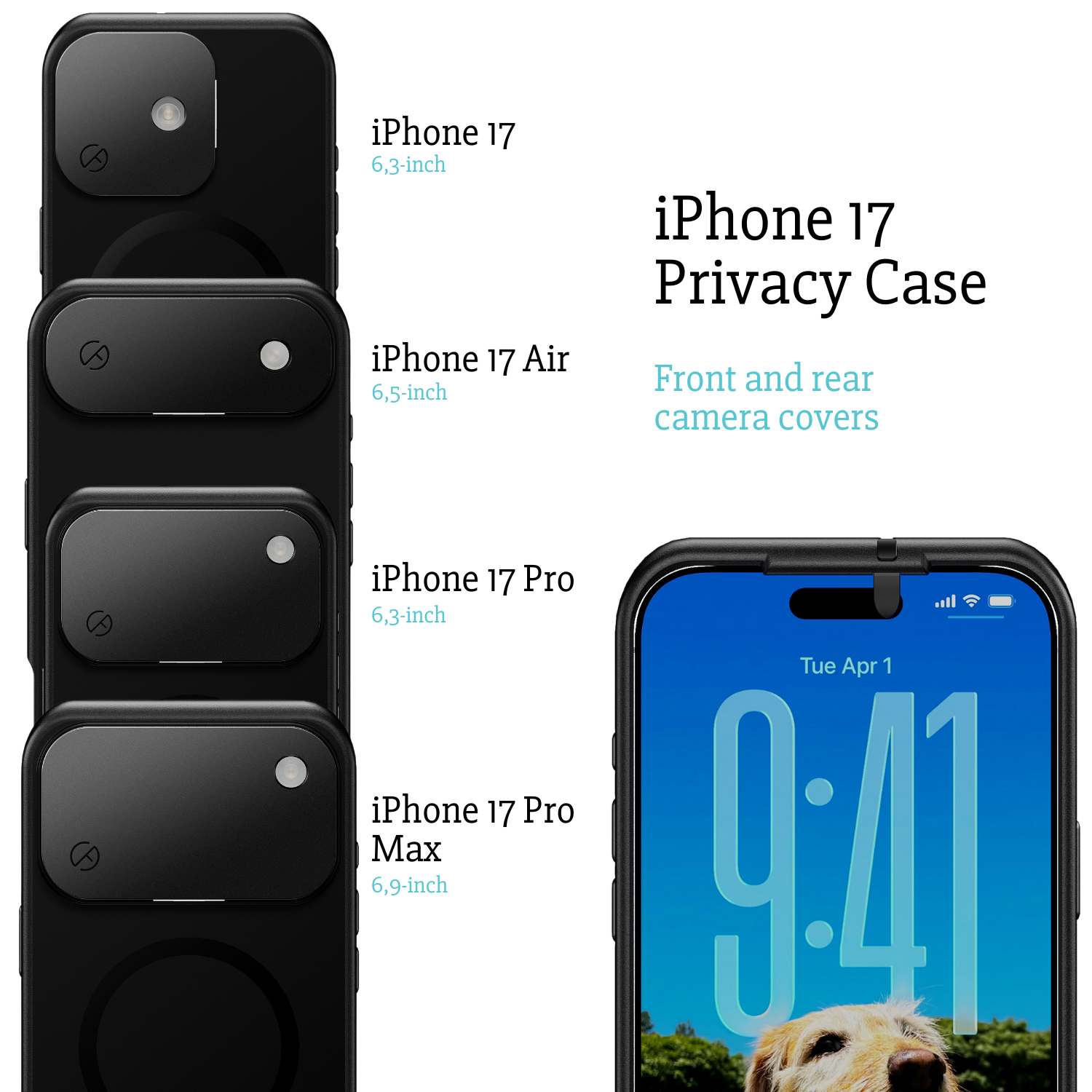
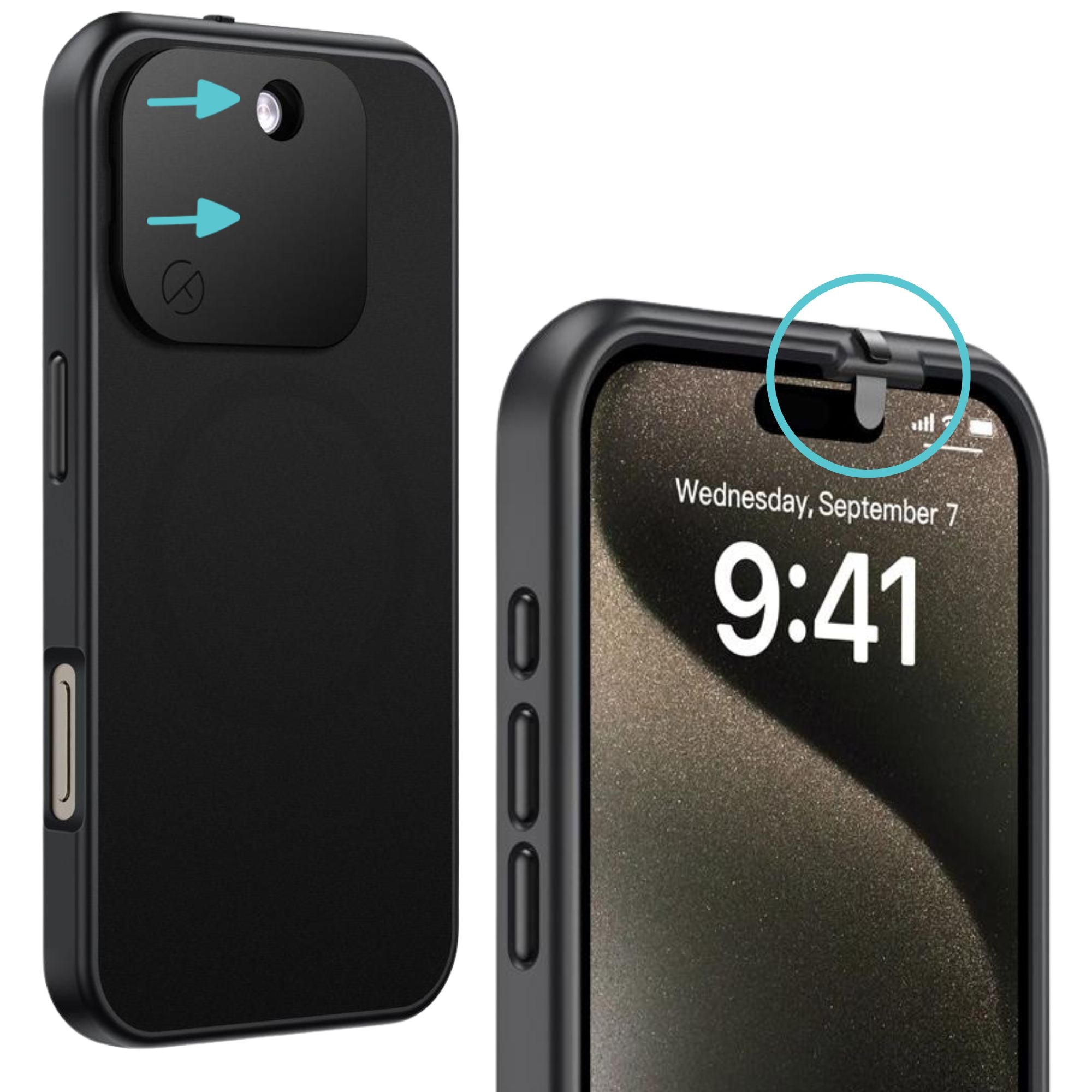
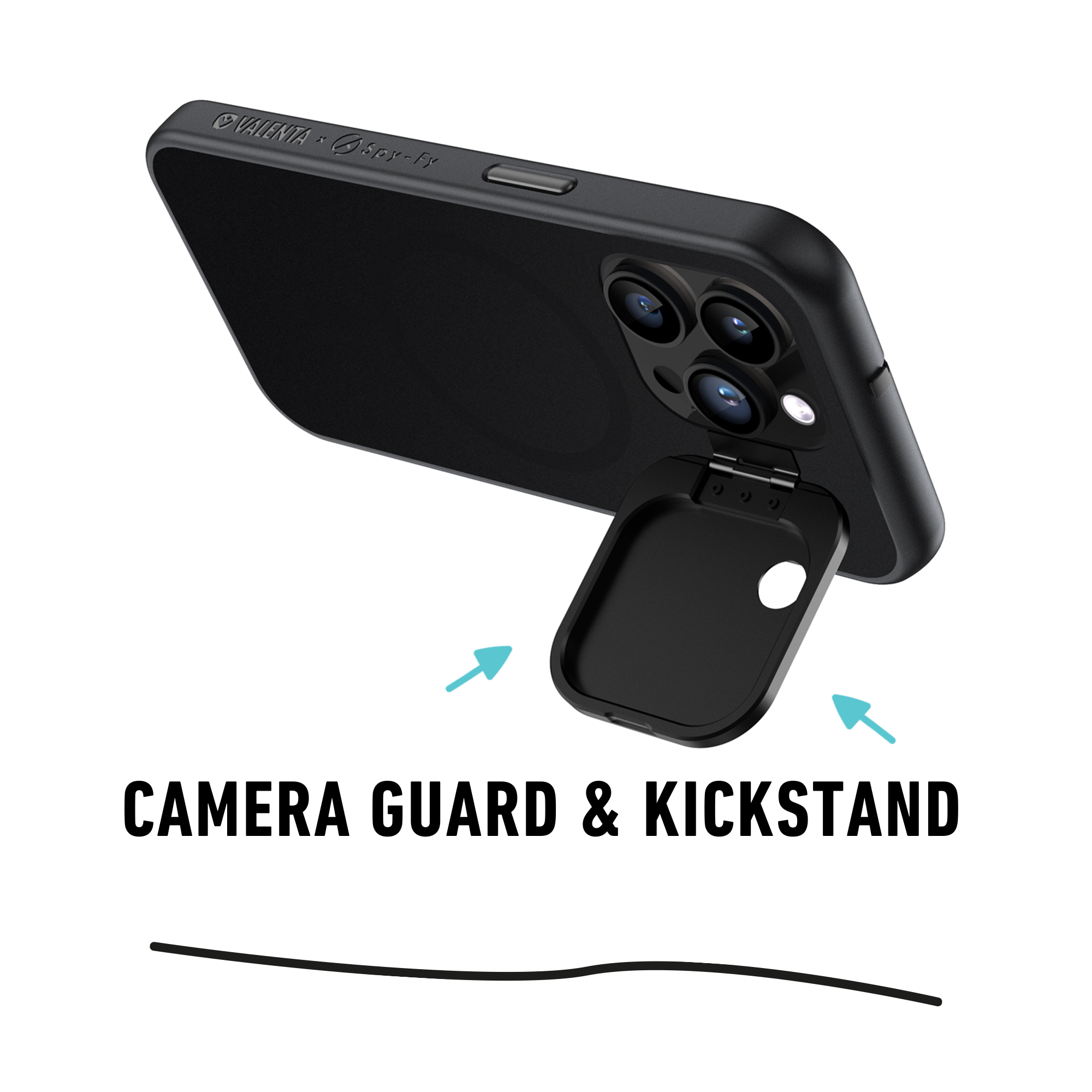
It does not block sound, it does not cover a camera lens, and it does not remove malware that is already on the device. Shielding interrupts radio links and does nothing to software. That is why signal blocking sits alongside, not instead of, the optical side of physical privacy covered in the Spy-Fy privacy case collection.
Passive shielding is legal in the United States. A Faraday product transmits nothing, which places it outside the Federal Communications Commission (FCC) prohibition on jammers. Operating, marketing, manufacturing or importing an active signal jammer is illegal under 47 United States Code (U.S.C.) 302a(b) and 333 and can bring seizure, civil penalties and criminal sanctions. A lined bag and a jammer are not the same category of product and should never be discussed as if they were.
The partial shielding trap
The most misunderstood thing about a Faraday backpack is that the whole bag is rarely a cage. On many models only the dedicated device sleeve or the main compartment is lined, while accessory pockets and external webbing are explicitly unshielded, according to specification listings published by forensic retailers. A phone dropped into a side pocket keeps transmitting.
Pricing sits far above the other formats. SLNT's E3 Faraday Backpack, one of the best-known models, retails at around $340 and includes a removable Faraday laptop sleeve plus a phone sleeve. Mainstream Faraday backpacks generally start around $200 and go well past $300, with waterproof and specialist versions costing more.
Faraday sleeve
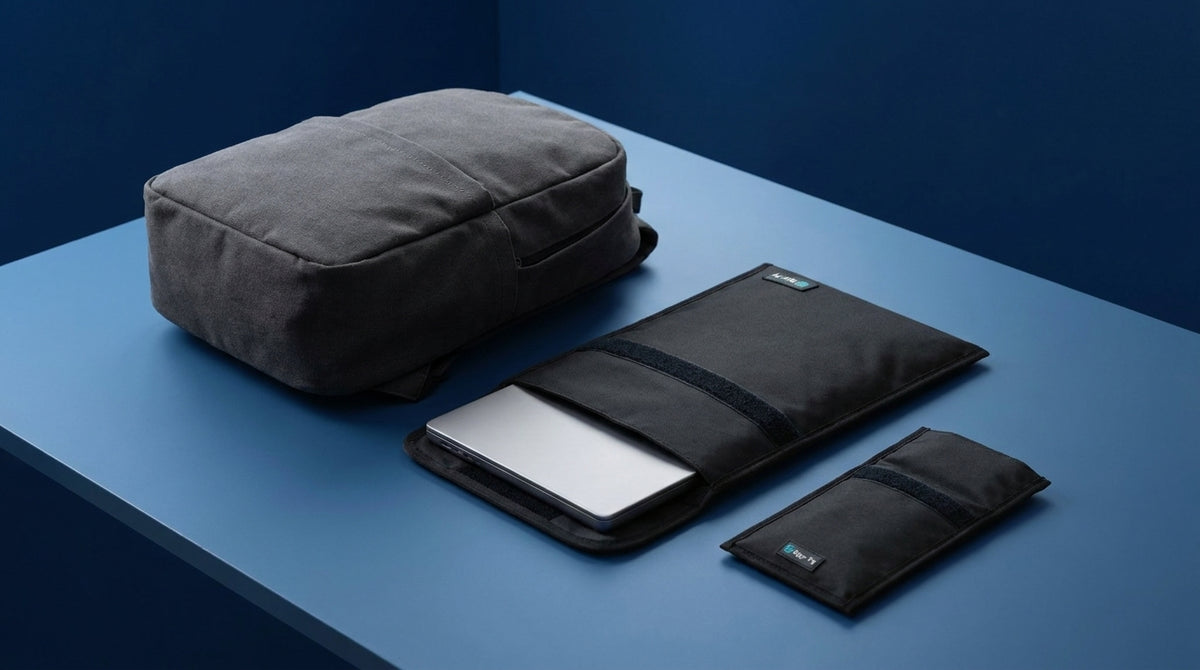
A Faraday sleeve is a flat, lined pouch sized to one class of device, sealed with a roll-top or a double fold. It is the cheapest format, the easiest to verify, and the one with the fewest places to leak, because there is nothing in it except shielding fabric and a closure. For most professional use, it is the format that matches the actual threat at a fraction of the cost of any Faraday backpack.
Verifiable test data matters more than size here. Spy-Fy's Faraday Bag for Phone, Laptop and Tablet is tested by Applus+ Keystone, a laboratory accredited to ISO/IEC 17025, the International Organization for Standardization and International Electrotechnical Commission standard for testing laboratories. Testing follows the Institute of Electrical and Electronics Engineers (IEEE) 299-2006 method across 30 MHz to 40 GHz, a method written for enclosures of 2.0 m and larger and used here as a measurement reference rather than a certificate. Measured averages over the 30 MHz to 6 GHz range are 69 decibels (dB, the unit that shows how much a shield weakens a signal) for the phone size, 69 dB for the tablet size and 76 dB for the laptop size. Those numbers come from a third-party report rather than an internal bench test, which is the distinction worth looking for.
The three sizes are 12 x 19 cm for phones, 33 x 25 cm for tablets and 39.5 x 26 cm for laptops up to 16 inches. The phone size fits an iPhone with a protective case still on it, which sounds trivial until you try to roll and seal a bag that is half a centimeter too tight.
Typical sleeve use: a journalist sealing a phone before walking into a source meeting, an executive isolating a handset during a board session, a traveler putting a laptop out of radio contact in a hotel room. For the measurement side explained in plain terms, our guide to how Faraday shielding works breaks down the numbers.
Faraday case
Two very different products are sold as a "Faraday case". The first is a rigid shielded box or hard case used for storage and transport. The second is a phone case or wallet-style flip cover with a conductive lining. They solve different problems and only one of them holds up in daily carry.
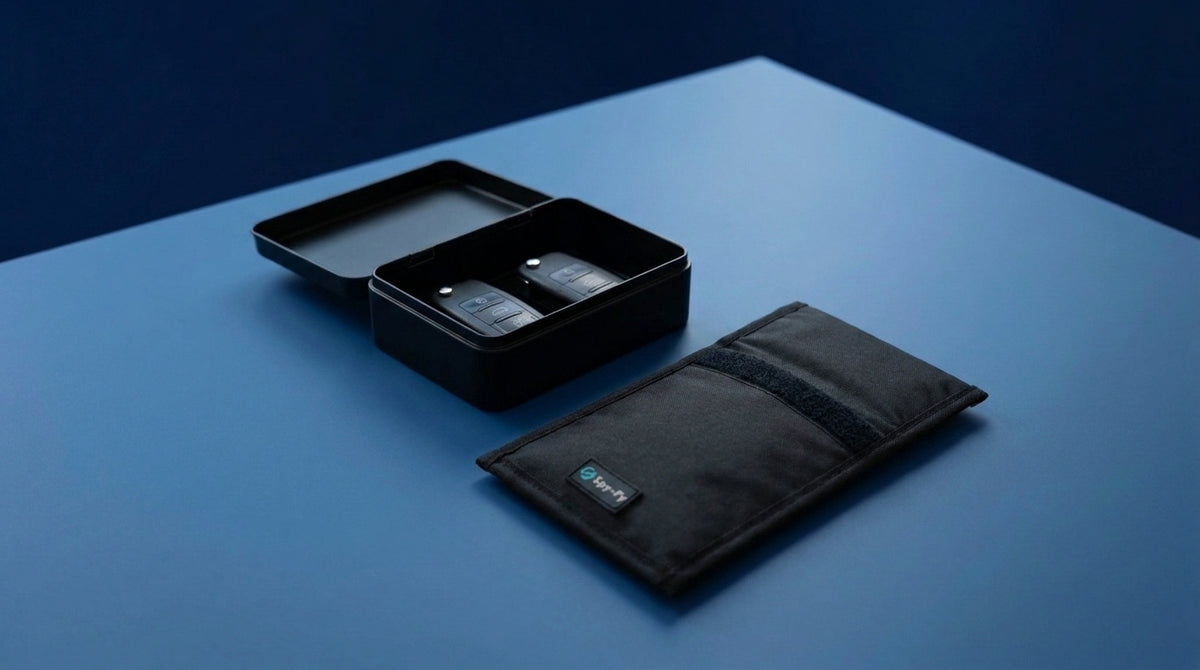
A rigid case gives a stable, repeatable seal because the closure is a gasket and a latch rather than fabric you have to fold correctly every time. That makes it the strongest option for storing devices at a fixed location: a desk drawer, a safe, an equipment room. The trade-off is bulk and weight, which rules it out as everyday carry.
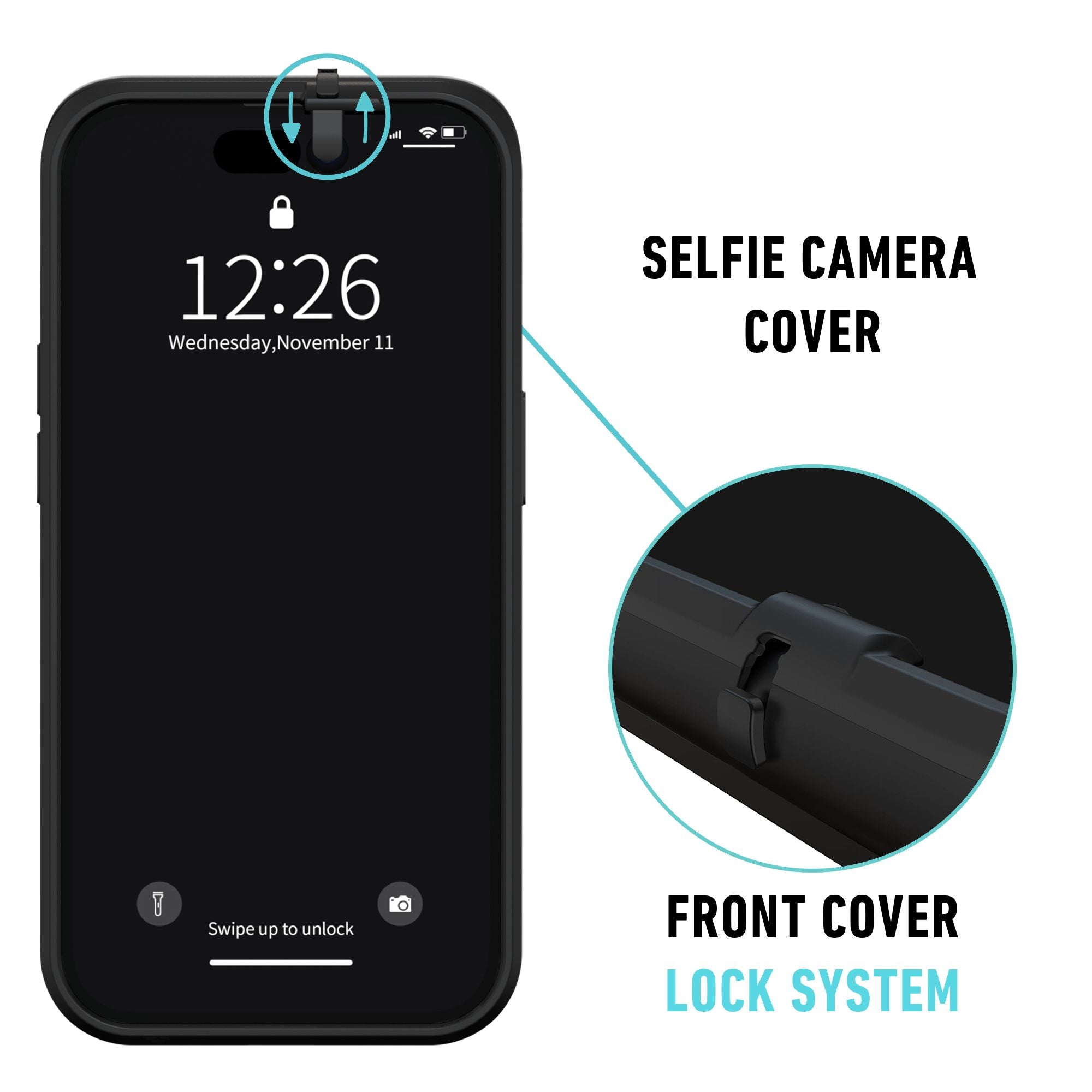
A shielded phone case is the weakest format by design. The phone has to come out, or the flap has to open, every time you use the device, so the shielding is only active during the minority of the day when the phone is closed and unused. A case that must be open to function is not a cage. We looked at this specific limitation in our piece on whether a Faraday phone case stops tracking. If you want a phone that stays private while you are using it, the relevant control is a physical camera cover, not a lining.
Faraday blanket
A Faraday blanket is a flexible shielding sheet that you wrap around an object rather than seal it inside. It is the format of choice for items that no bag will fit: a drone, a vehicle telematics unit, a tray of equipment, a server component awaiting disposal.
Its weakness is structural. A blanket has no engineered closure, so attenuation depends entirely on how much the material overlaps itself and whether the wrap stays tight. A Faraday enclosure only shields what is completely inside it while it is sealed, and a loose corner, a protruding cable or an open port breaks the cage. A blanket gives you more ways to get that wrong than any other format.
Shielding fabric also degrades with repeated folding and seam wear, which affects a blanket more than a rigid case because folding is how a blanket is used and stored. Treat it as a specialist tool for awkward objects, not as a general-purpose privacy product.
Matching the format to the threat model
Match the format to what you actually carry and how often you need the shield active. A Faraday backpack buys you capacity and a single bag to manage. A sleeve buys you verified performance for a fraction of the price. A rigid case buys you a repeatable seal at a fixed location. A blanket buys you flexibility for objects that fit nothing else.
| Format | Typical US cost | What it holds | Best for | Main weakness |
|---|---|---|---|---|
| Faraday backpack | Highest, from around $200 to well over $300 | Laptop, tablet, phone, daily carry | Field teams and anyone who wants one bag for everything | Often only the dedicated sleeve or main compartment is lined |
| Faraday sleeve or bag | Lowest, well under $100 per size | One device per bag | Meetings, hotels, source contact, air travel | You carry it inside another bag |
| Rigid Faraday case | Scales with internal volume, no consistent published band across vendors | Phones, fobs, small equipment | Fixed storage at home or in the office | Too bulky and heavy for daily carry |
| Faraday blanket | Scales with sheet area, no consistent published band across vendors | Oversized or oddly shaped items | Drones, vehicle electronics, equipment wraps | No engineered closure, so performance depends on the wrap |
Executives and corporate travelers
The dominant concern here is border device inspection and meeting confidentiality. US Customs and Border Protection (CBP) device searches have passed 55,000 a year, up from roughly 47,000 the year before, and the large majority are basic manual searches that require no suspicion at all. CBP Directive 3340-049B replaced the earlier directive and expanded the searchable categories to include smartwatches, subscriber identity module (SIM) cards, GPS units, vehicle infotainment systems and drones. The directive took effect on 1 January 2026 and allows a basic manual search with or without suspicion, while an advanced search with external equipment needs reasonable suspicion or a national security concern plus supervisory approval. A device that cannot be inspected may be detained, normally no longer than five days without higher approval. Be clear-eyed about what shielding does here: a Faraday bag stops a device from phoning home, it does not stop an officer from asking you to hand the device over. For this group a full Faraday backpack is usually overkill, and the practical pick is a lined laptop sleeve inside a normal, unremarkable bag.
Journalists and their sources
Discretion is a specification. A tactical-looking Faraday backpack announces that you are carrying something worth examining, while a plain sleeve inside an ordinary bag does not. Prioritize published third-party attenuation data and neutral styling over capacity.
Healthcare and legal professionals
Privileged material on a laptop does not carry an exemption at a border crossing. The CBP directive does not exempt attorney-client or patient data from search, but Section 5.2 requires an officer to contact CBP's Associate/Assistant Chief Counsel and segregate the material once privilege is asserted, so the control that matters is deciding what travels on the device in the first place. Shielding limits what the device can send and receive, it does not limit what a search can read.
Car owners
A fob pouch, not a backpack. The long-running keyless test series of the Allgemeiner Deutscher Automobil-Club (ADAC), the German motoring association, now covers more than 850 keyless vehicles and still finds that almost half can be opened with a relayed signal and about one in three can be started. That is a German club test series rather than an official certification, and it is the clearest public evidence of why signal-blocking pouches remain the standard recommendation. Mercury Insurance, citing National Insurance Crime Bureau data, reported a 23 percent year-over-year decline in US vehicle thefts while keyless exploitation and relay attacks grew as methods. Our guide to the best Faraday bag for car keys covers the frequencies that matter for fobs. The spec that decides whether a pouch works is attenuation at the fob's reply band, around 315 MHz in the United States and 433 MHz in Europe. Spy-Fy's published range starts at 30 MHz, so both bands sit inside the tested spectrum.
People worried about Bluetooth trackers
Apple implemented cross-platform unwanted tracking alerts in iOS 17.5 and Google on Android 6.0 and later, both built on the joint Detecting Unwanted Location Trackers specification. Detection comes from the operating system. A Faraday pouch is what you put the tracker in after you have found it, so it stops reporting while you decide what to do next.
How to read shielding claims before you buy a Faraday backpack
Attenuation is measured in decibels and the scale is logarithmic, so small-looking differences are large. Roughly every 10 dB means ten times weaker leakage: 60 dB leaves about one millionth of the original signal and 80 dB about one hundred-millionth. A claim of "99 percent blocking" sounds impressive but equals only about 20 dB, a level at which a phone often still connects near a tower.
Three claims appear constantly in marketing copy and all three are routinely misused:
- IEEE 299-2006 is a measurement method for shielded enclosures with all dimensions of 2.0 m or more, covering 9 kHz to 18 GHz. IEEE Std 299.1-2013 is the companion method for enclosures between 0.1 m and 2 m, which is the size class a bag, sleeve or backpack actually falls into.
- IEEE 299 sets no pass or fail limit. The owner of the shield specifies the test frequencies and the acceptable shielding effectiveness, so there is no universal "certified" dB number and "IEEE 299 compliant" is not a certificate.
- MIL-STD-188-125-2, issued in the late 1990s, covers high-altitude electromagnetic pulse (HEMP) hardening of transportable ground-based command, control, communications, computers and intelligence (C4I) systems designated by the Joint Chiefs or a Military Department. It does not describe consumer bags, so a backpack labeled compliant with it is borrowing authority from a document about hardened military installations.
Four questions separate tested products from marketed ones: which laboratory ran the test, what that lab is accredited to, which frequency range was covered, and whether the published figure is an average or a minimum. If a vendor cannot answer all four, treat the dB number as advertising.
Five failure points shared by every shielded product
Most real-world failures have nothing to do with the fabric. Whether you own a Faraday backpack, a sleeve, a rigid case or a blanket, the same five weaknesses decide whether the shield holds.
- Unshielded pockets. On many backpacks the accessory and webbing pockets are not lined at all, so anything stored there stays connected.
- Incomplete closure. A cable running out of the bag, a half-folded roll-top, or a device edge caught in the seal all break the cage. Shielding only applies to what is completely inside while the bag is sealed.
- Fit. A phone in a thick case, or a 16-inch laptop in a 15-inch sleeve, prevents the fold count the manufacturer designed the closure around.
- Wear. Shielding fabric degrades with folding, seam fatigue and repeated opening. Vendors including SLNT advise periodic re-testing and replacement once a sealed phone still rings.
- Battery drain. A powered-on phone inside a sealed bag keeps raising its transmit power while hunting for a tower. The bag is passive and harms nothing, but switching the device off or enabling airplane mode before sealing avoids the drain. If the device has to stay powered for a long trip, put the power bank inside the bag with it. A charging cable run out through the closure acts as an antenna and cancels the shielding.
A four-part test you can run at home
You do not need a laboratory to catch a failing bag. Run each step with the product fully sealed, and repeat the whole sequence every few months on gear you rely on.
- Call test. Seal the phone, then call it from a second phone. It should not ring, buzz or light up.
- Wi-Fi and Bluetooth test. From a second device, check whether the sealed phone is still visible or still pairs.
- Message test. Send a text or trigger a push notification and confirm nothing arrives until you open the bag.
- Key fob test. Seal the fob, stand next to the car and press the button. Nothing should happen.
If any step fails, the product is not protecting you. Retire it rather than hoping it performs better next time.
What most professionals should actually buy
A Faraday backpack makes sense if you move equipment for a living and want capacity, weatherproofing and shielding in one object. For everyone else it is a $200-plus answer to a problem a lab-tested sleeve solves for a fraction of that, with fewer unshielded pockets to worry about and published third-party numbers to check. Buy on verified attenuation data and closure quality, not on a dB figure printed next to a military standard about hardened command posts.
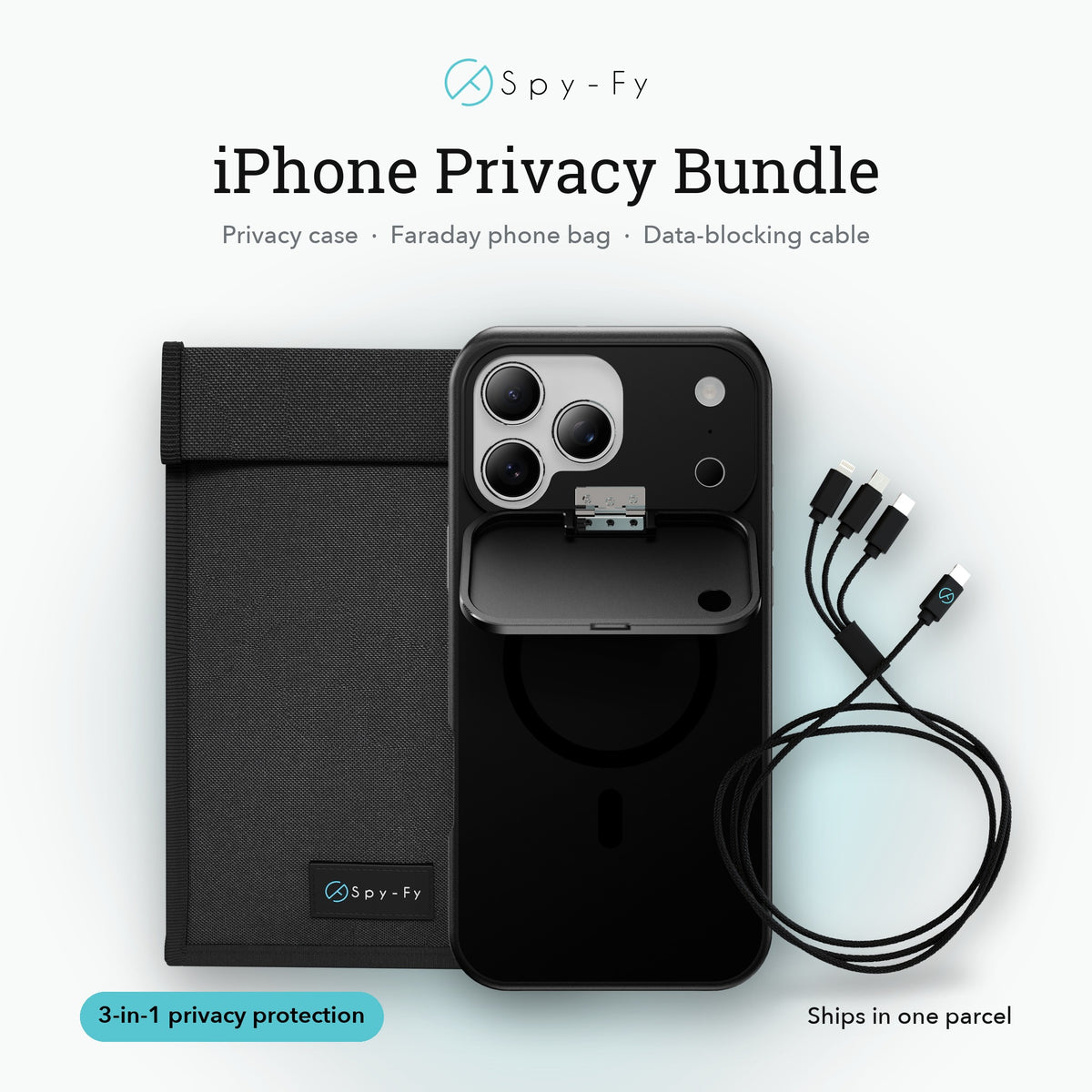
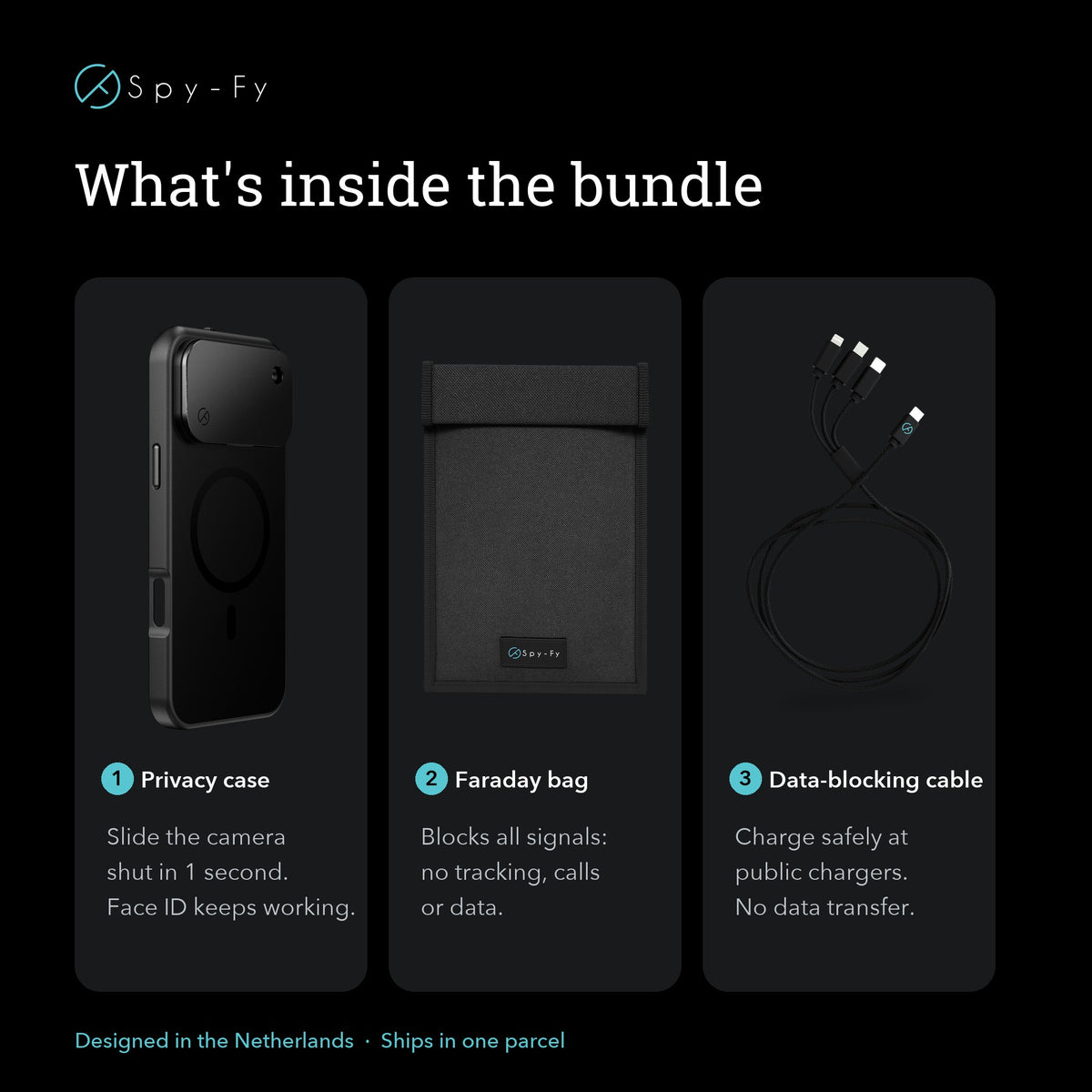
Signal blocking also handles only one layer of the problem. A sealed bag stops radio traffic while the device is inside it and does nothing about a camera that is live every other hour of the day. Pair a tested Faraday bag with a physical camera cover and you have covered both the radio path and the optical one. The Spy-Fy privacy cases with built-in front and rear camera covers close the second gap, and the Faraday phone bag handles the moments when the device needs to be genuinely offline.