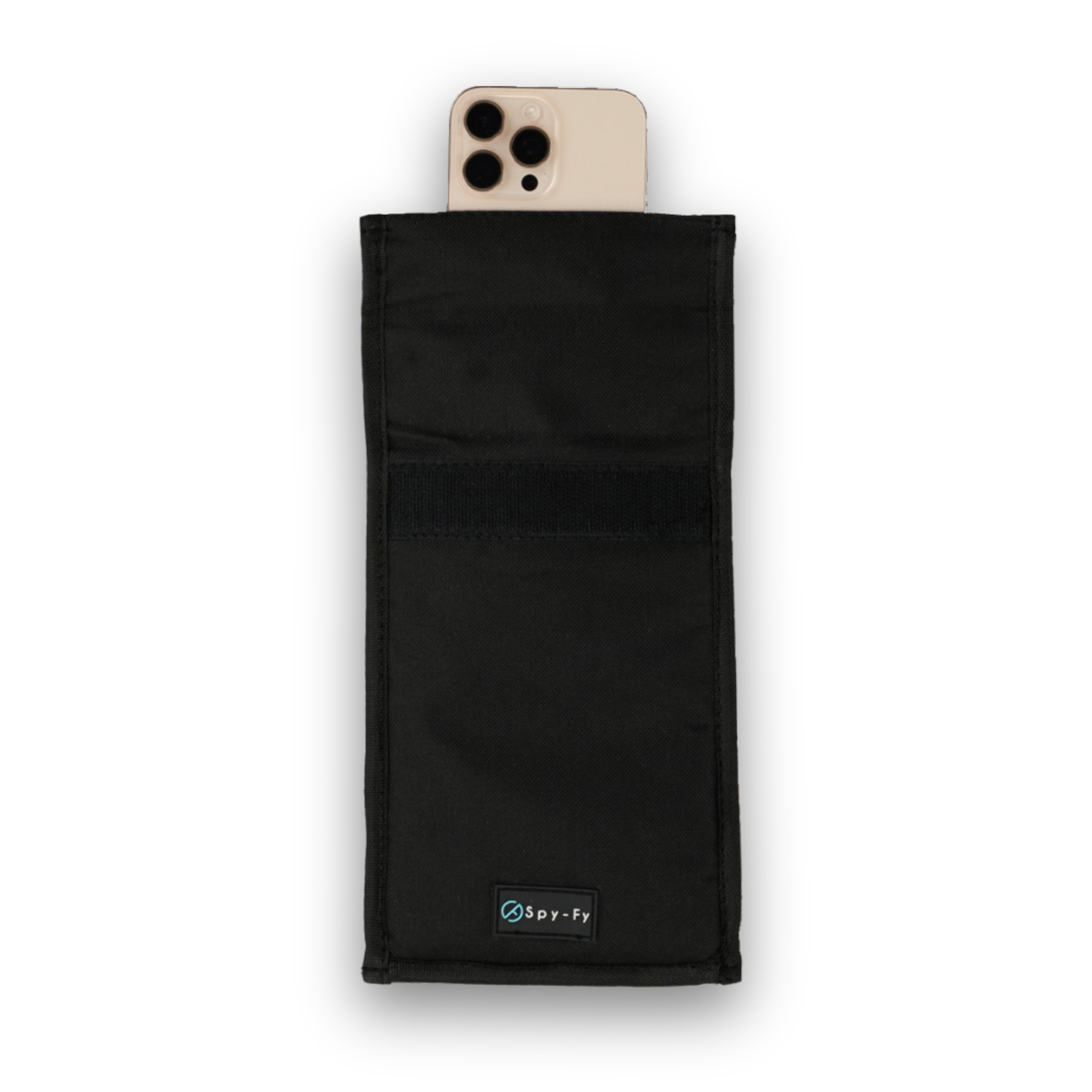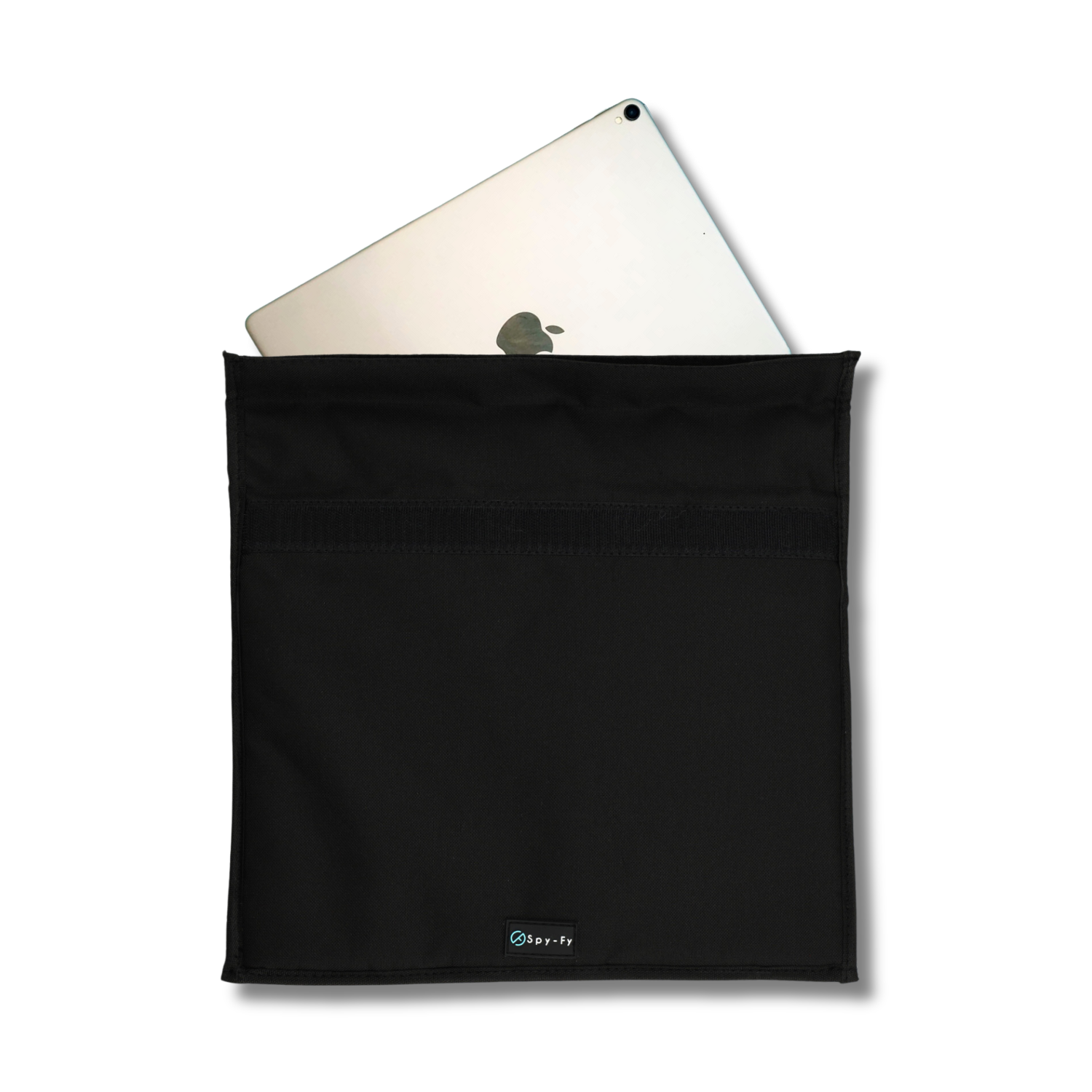
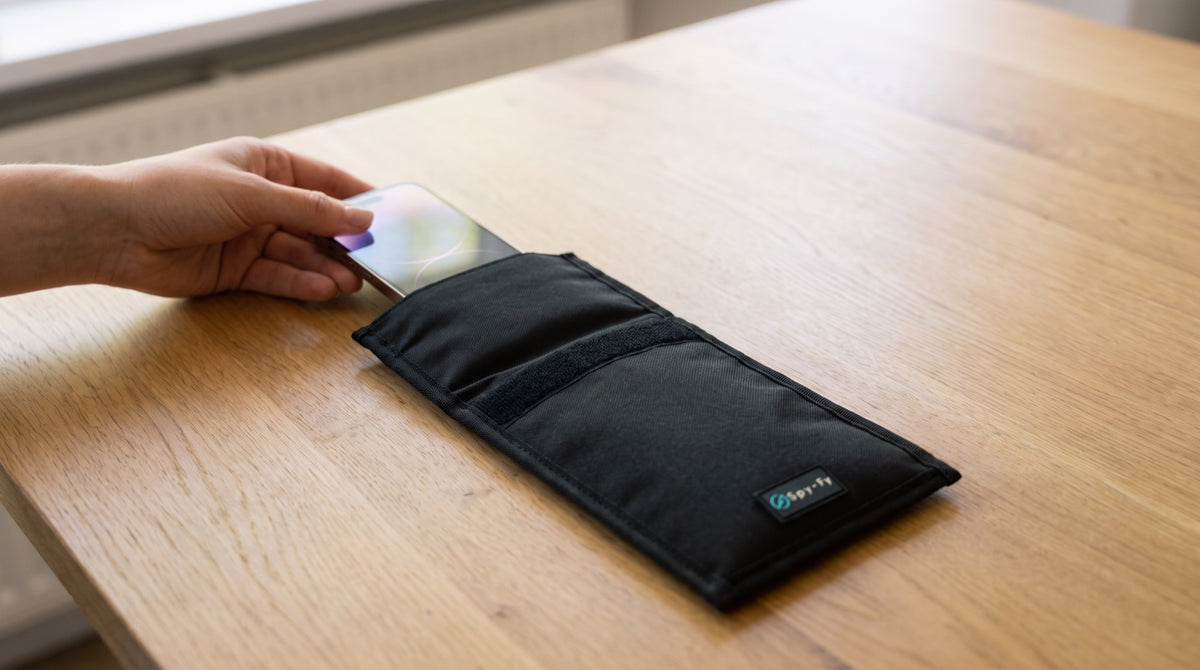
A Faraday cage is an enclosure of conductive material, either a continuous shell or a mesh, that keeps external electric fields and electromagnetic radiation out. Charges in the conductor redistribute themselves so that the field inside the enclosure is canceled. Seal a phone inside a well-built one and it stops receiving cellular, Wi-Fi, Bluetooth and Global Positioning System (GPS) signals, because none of those signals reach it.
Most people asking what is a Faraday cage want the practical version of that answer, and the practical version depends on who you are. This guide is written for executives traveling with devices they would rather not have tracked, journalists meeting sources, attorneys storing a client's phone before it goes to a forensic examiner, and car owners whose keyless fob can be relayed from a hallway table to the driveway.
Michael Faraday built the first one in 1836 at the Royal Institution in London. The setup was a cube of roughly 12 feet, a wooden frame standing on glass insulators, covered in copper mesh and strips of tin foil. High-voltage discharges were fired at the outside while an electroscope inside registered no charge at all. The portable descendant of that cube is a lined pouch, such as a Faraday bag sized for a phone or laptop.
How does a Faraday cage work
A Faraday cage works through charge redistribution, not absorption. When an external electromagnetic wave reaches the conductive shell, free electrons in the metal move in response to the wave's electric field, piling up on one side and leaving positive charge on the other. The field created by those separated charges points the opposite way and cancels the incoming field in the hollow interior. The effect is passive and needs no power source.
Whatever energy is not reflected has to travel through the wall itself, and there the governing quantity is skin depth. The field decays by a factor of exp(-t/δ), where t is the wall thickness and δ (delta, the skin depth) equals 1/√(πfμσ), with f the frequency, μ the magnetic permeability of the material and σ its conductivity. Higher frequency, higher conductivity or higher permeability all shrink the skin depth, which means stronger attenuation. That is why a thin copper layer is more than enough for gigahertz signals while low-frequency fields are far harder to stop.
Grounding is often described as mandatory. It helps drain induced currents away safely, but the cancellation inside the enclosure follows from charge redistribution in the conductor, not from a connection to earth.
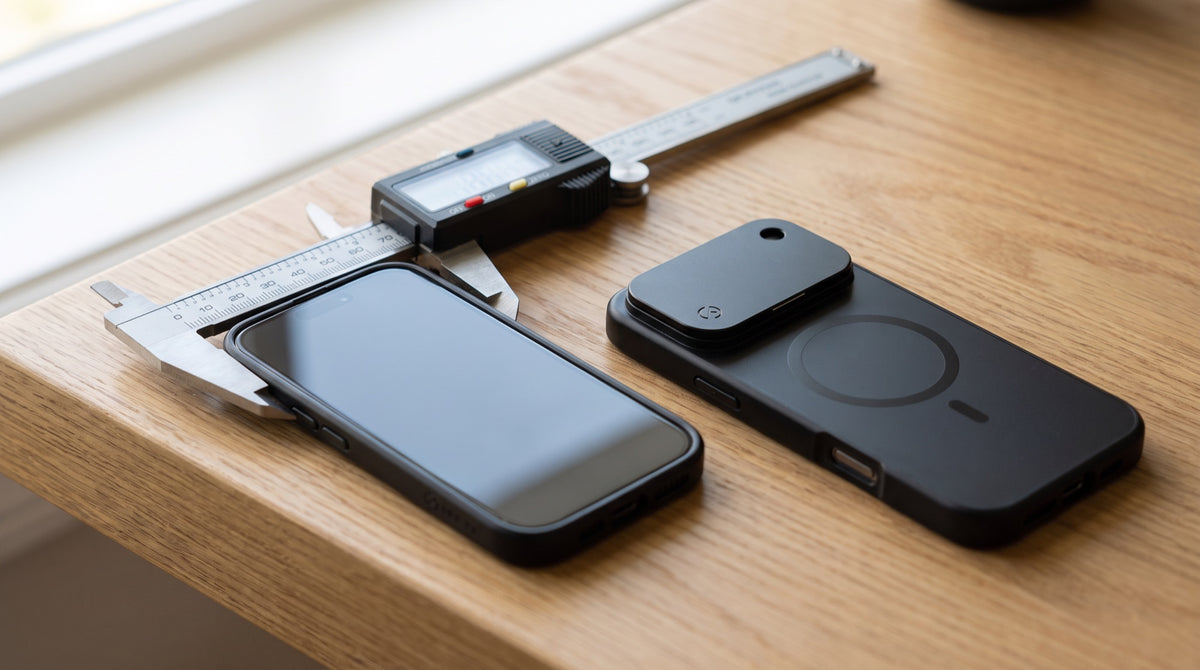
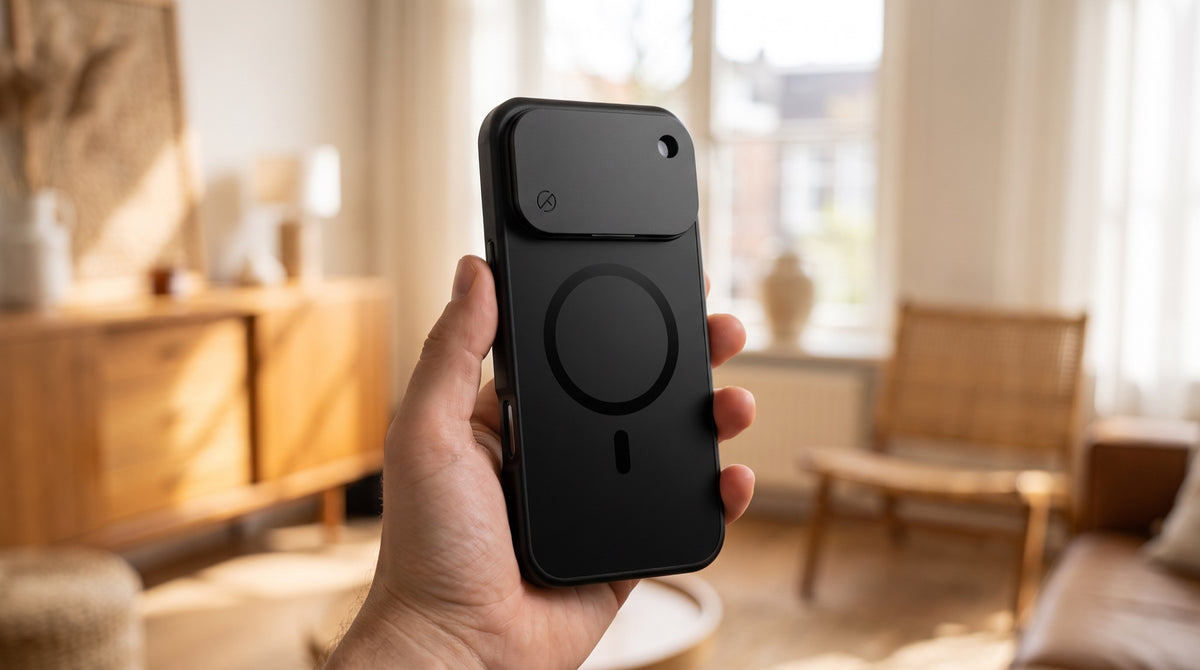
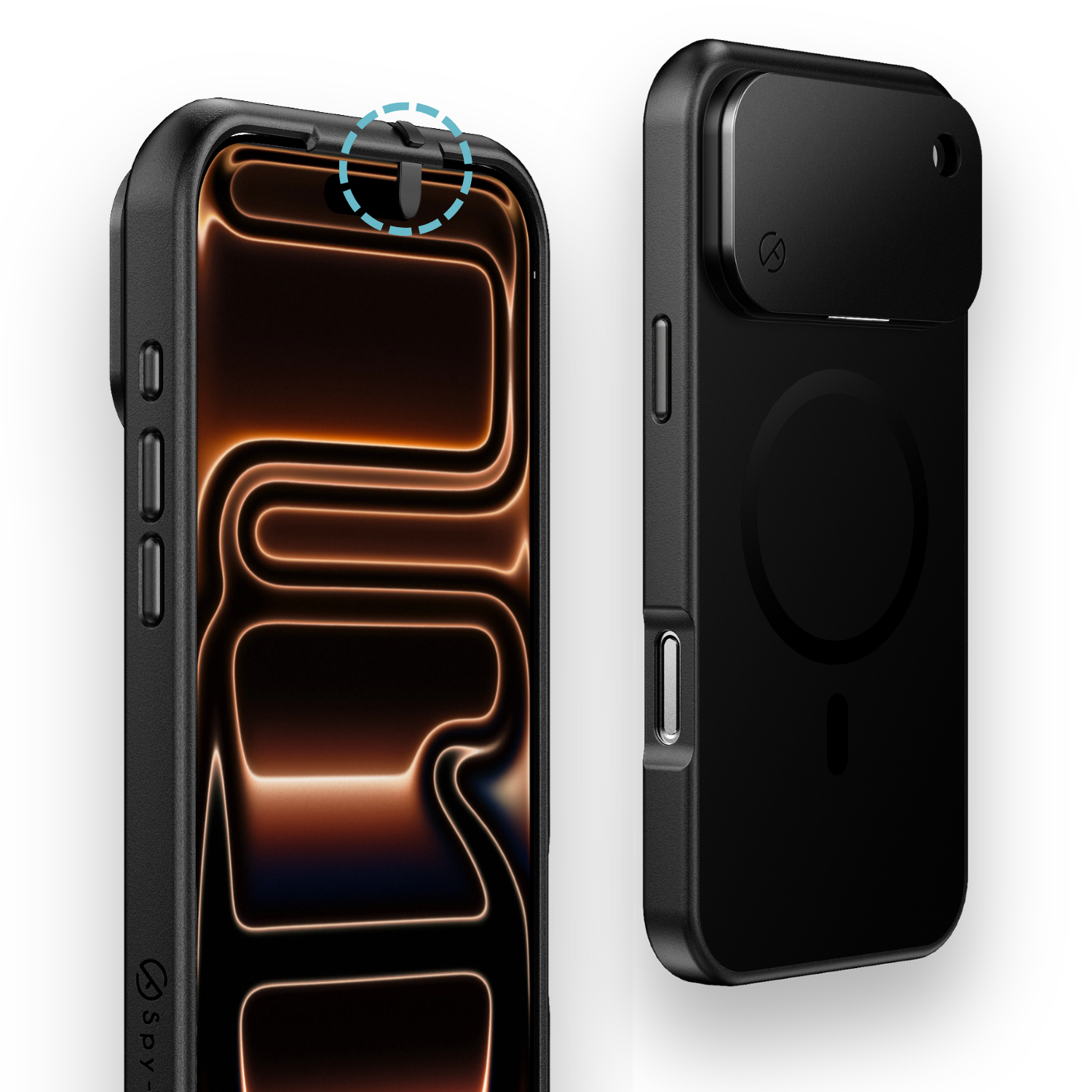
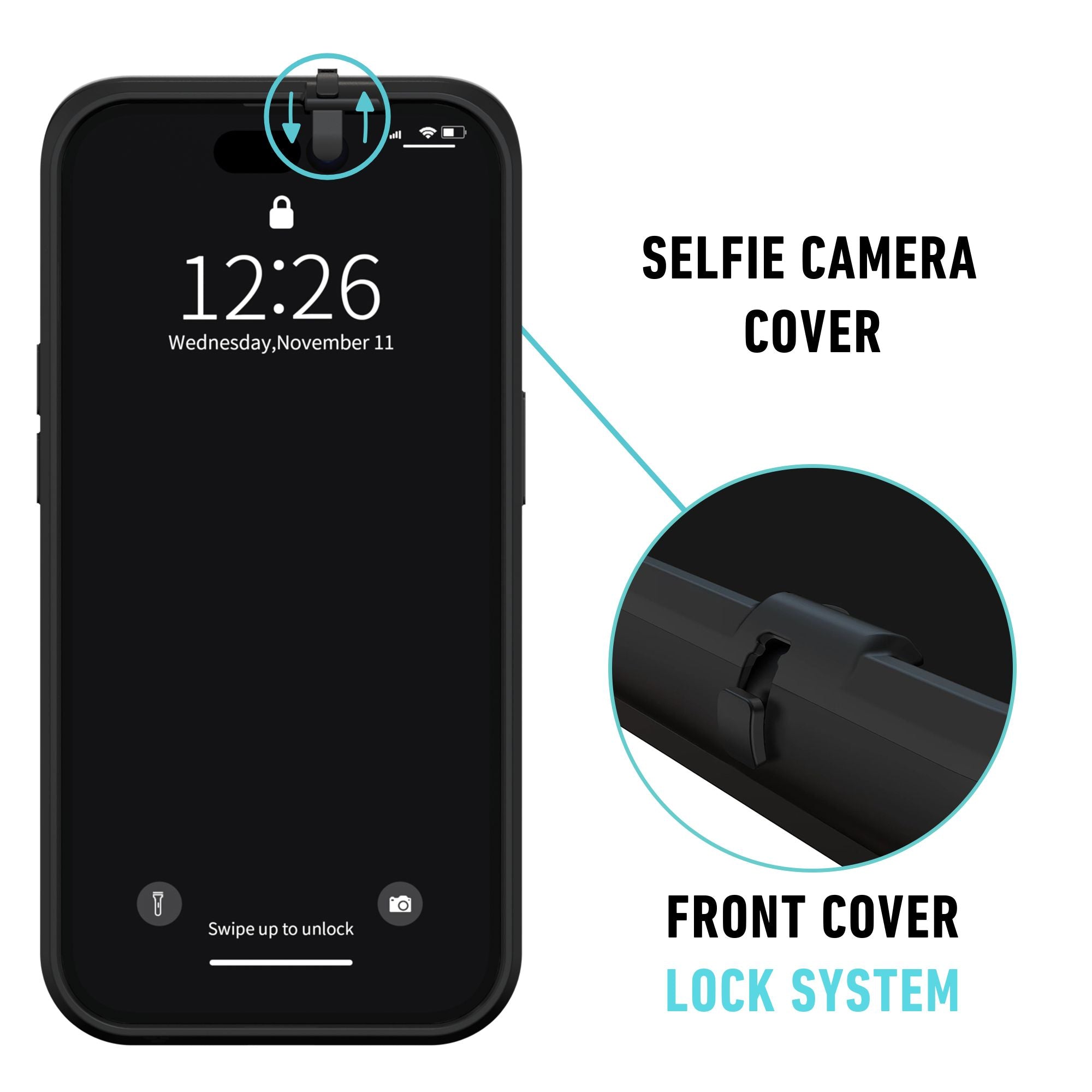
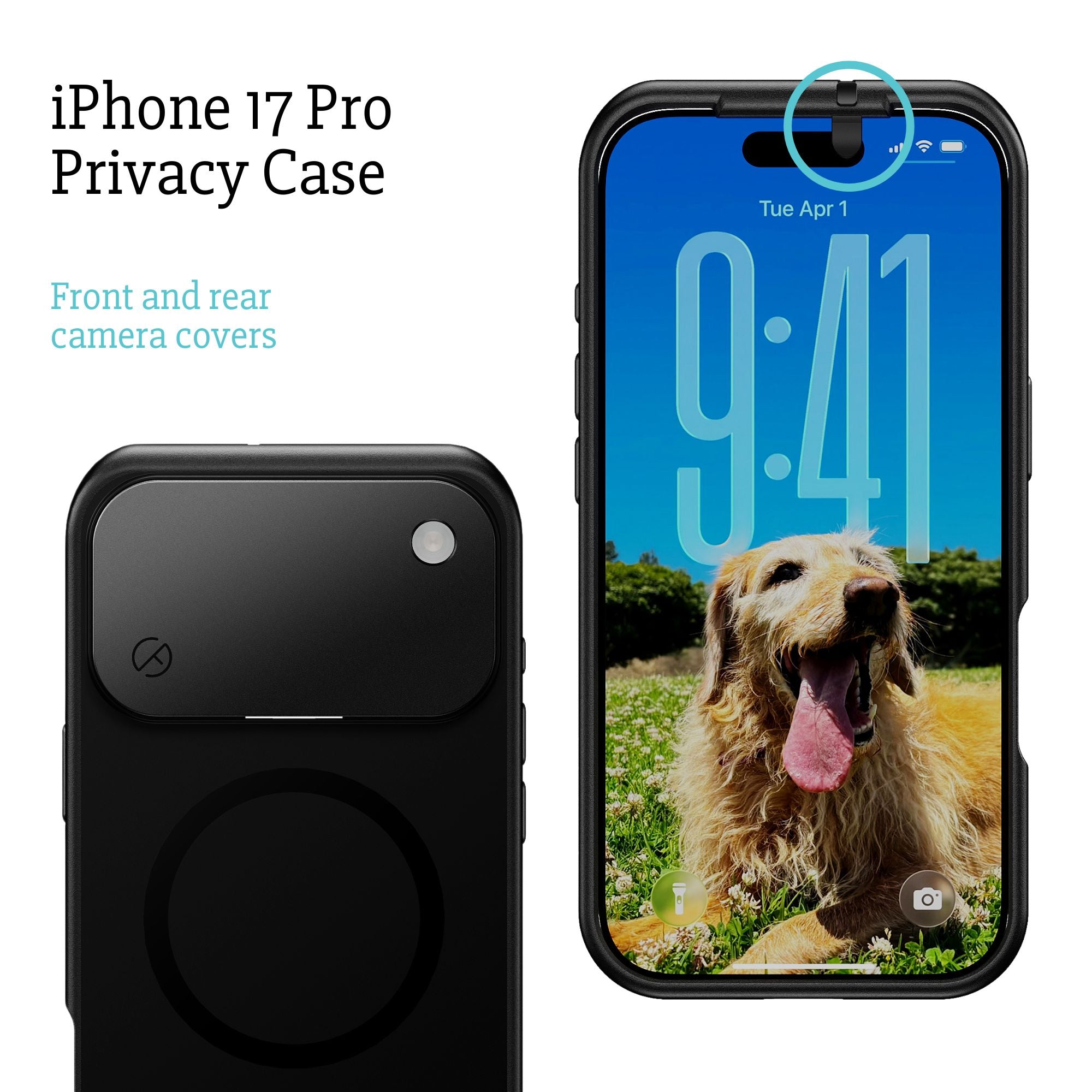
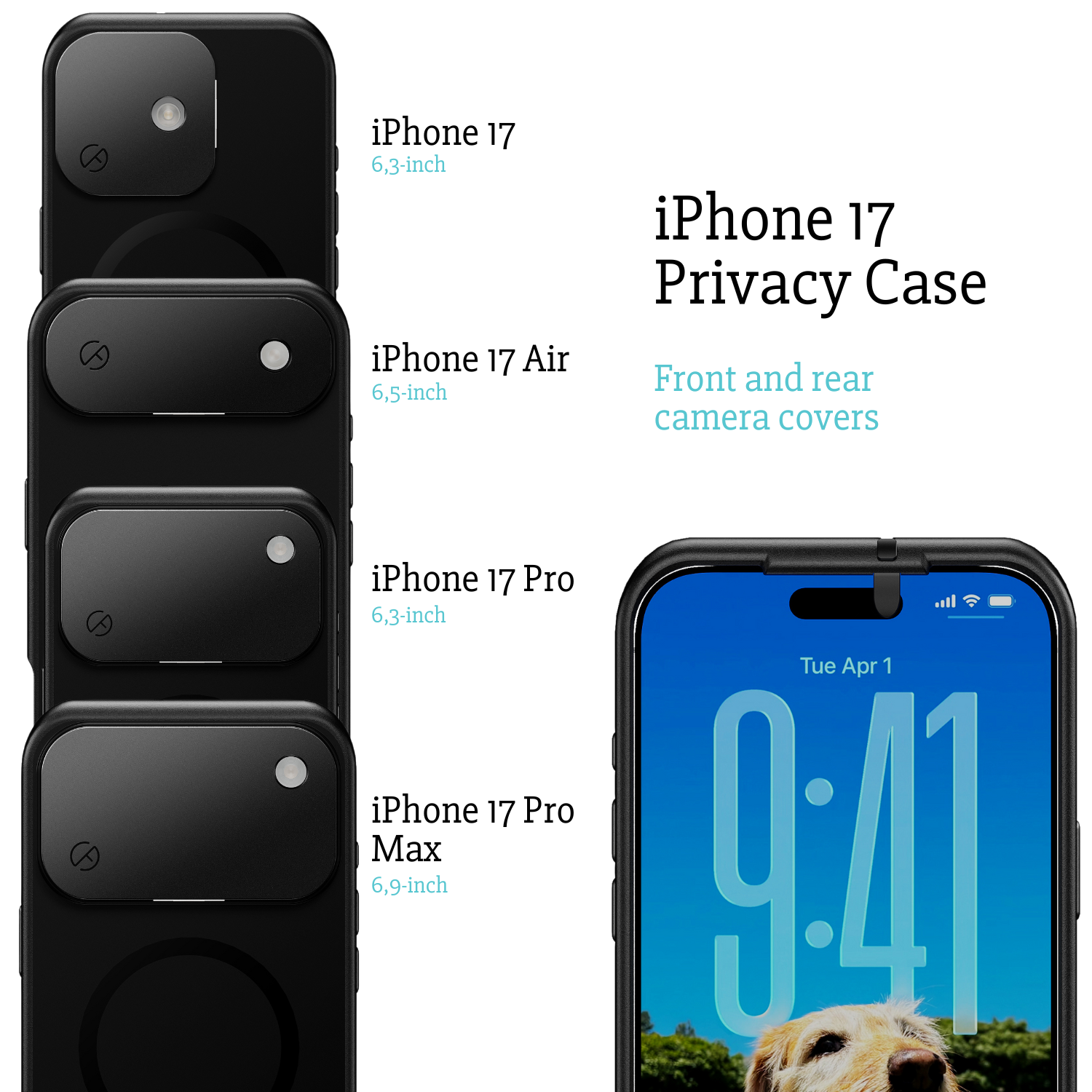
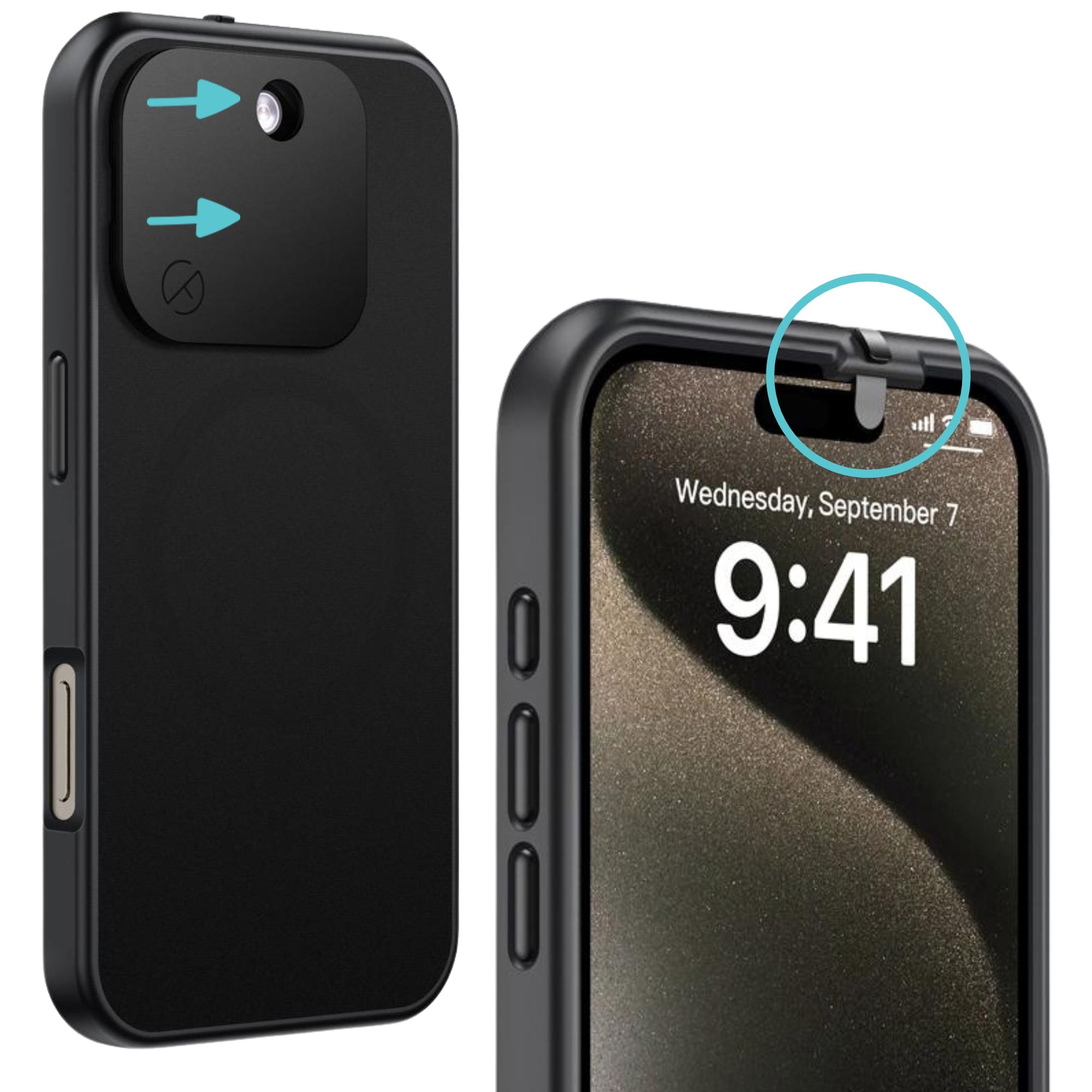
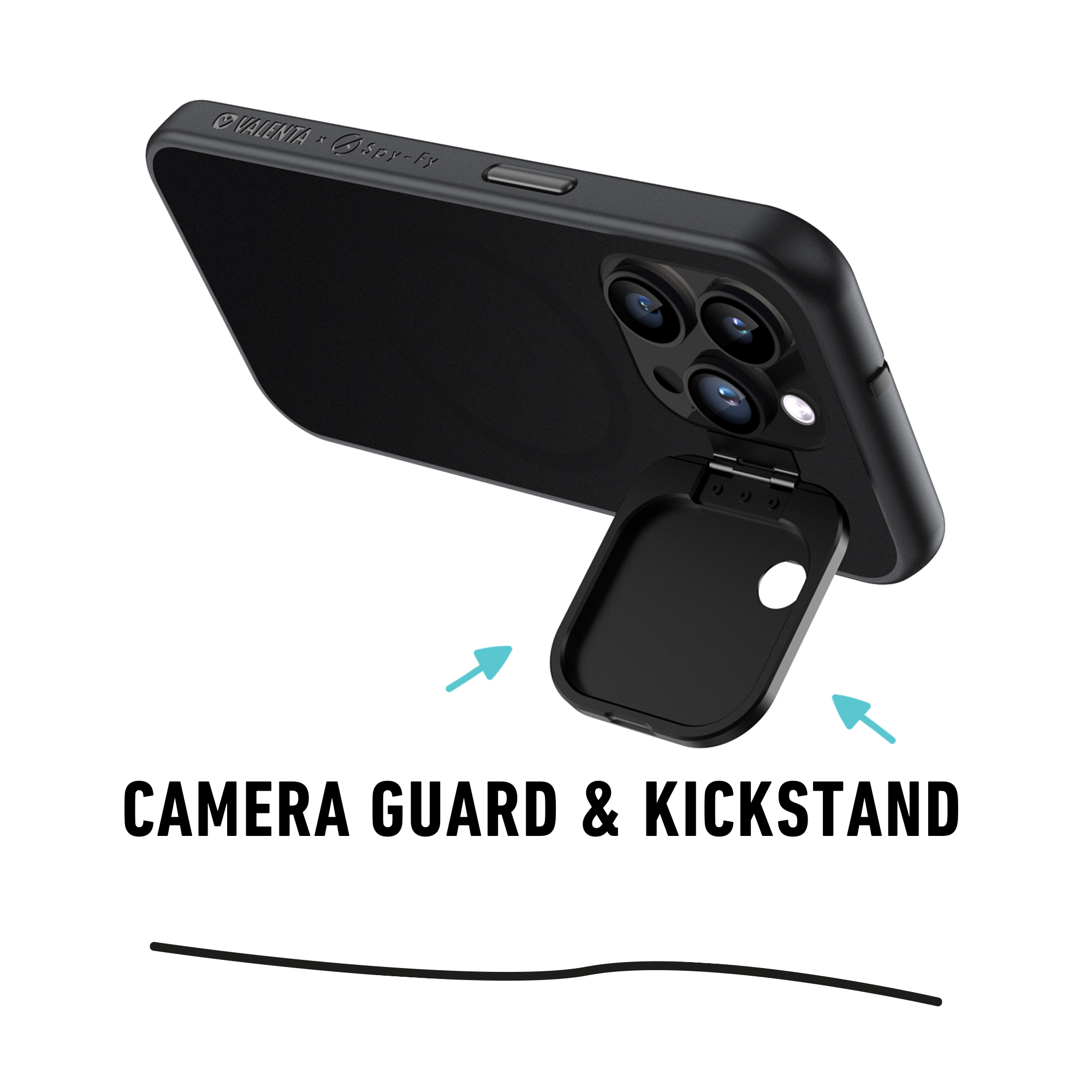
One asymmetry is worth knowing before you buy anything. An enclosure generally attenuates outgoing transmissions less than incoming ones, and at higher frequencies a transmitter sitting inside can sometimes still couple to the outside world. Shielding also says nothing about optics. A sealed pouch blocks radio, while a camera lens needs a physical barrier, which is the job of privacy cases with built-in camera covers.
What is a Faraday cage made of, and why mesh works
Copper, aluminum and steel are the usual materials, chosen for conductivity, cost and durability. Commercial bags and pouches use fabric laminated with conductive layers, typically copper and nickel, because a flexible shield has to survive being folded. The material matters less than people assume. Continuity matters more.
A mesh behaves like an unbroken conductive surface as long as the holes are substantially smaller than the wavelength being blocked. Engineers commonly work to a maximum of roughly one tenth of the wavelength. The numbers are forgiving at high frequencies. A 2.45 GHz microwave signal has a wavelength of about 12 centimeters, so openings of around a centimeter still stop it, while visible light with its far shorter wavelength passes straight through. That is exactly why you can watch food turn behind a perforated microwave door without being cooked alongside it.
What the shielding numbers mean
Shielding performance is expressed as shielding effectiveness in decibels (dB), a logarithmic ratio between the field strength outside the enclosure and the field strength inside. Every 20 dB represents a tenfold reduction in field strength, so 80 dB is four orders of magnitude. Those figures are the only honest basis for comparing products.
- US military standard MIL-STD-188-125-1, which covers fixed ground facilities protected against a high-altitude electromagnetic pulse (HEMP), is summarized in practice as 20 dB at 10 kHz and 80 dB from 10 MHz to 1 GHz.
- MIL-STD-188-125-2, the transportable equivalent, requires waveguide-below-cutoff arrays for conduit and ventilation penetrations, with a cutoff frequency of at least 1.5 GHz and at least 80 dB of attenuation at 1 GHz. A hole is tolerable only when its geometry makes it useless as a path for the frequency you care about.
- Commercial Faraday bags are typically tested against standards from the Institute of Electrical and Electronics Engineers (IEEE) and against MIL-STD-188-125, with manufacturers claiming 80 dB to well over 100 dB across roughly 200 MHz to 40 GHz. That range covers 4G and 5G including millimeter wave bands at 24 to 40 GHz, Wi-Fi at 2.4, 5 and 6 GHz, Bluetooth, and GPS L1 at 1575.42 MHz.
- Plain mylar film measures around 7 dB in comparative testing, against 60 to 105 dB for properly tested bags. Mylar is packaging, not shielding.
Where you already use one without noticing
Shielded enclosures are more common than the phrase suggests. The mesh in a microwave door is a Faraday screen. A car body is a partial cage, which is why occupants are generally safe during a lightning strike. Elevator cars kill cellular reception for the same reason. Hospitals build full rooms around magnetic resonance imaging (MRI) scanners, and laboratories use radio frequency (RF) test chambers where walls, floor, ceiling and door form one continuous conductive surface. In those rooms the sheet metal is never the hard part. Above roughly 1 GHz, performance is decided almost entirely by seams and openings such as cable feedthroughs, ventilation ducts and door hinges.
The improvised versions disappoint for the same reason. A cookie tin has a lid gap, foil has creases and tears, and neither has a measured attenuation figure behind it. Both are closer to a demonstration than a control.
Faraday cage versus Faraday bag versus Faraday box
A Faraday bag is a portable Faraday cage made from flexible fabric with conductive layers, closed with a roll-top or hook-and-loop seal instead of rigid walls. The physics is identical. The difference is mechanical. A welded room has no moving seam to wear out, while a bag's attenuation depends entirely on how tightly you close it and how many times it has been folded along the same line.
Size also decides which measurement method applies. IEEE Std 299 defines the test method for enclosures where every dimension is 2.0 meters or larger, while IEEE Std 299.1 covers small enclosures from 0.1 meters to 2 meters, which is the size class of bags and boxes. Both standards carry Inactive-Reserved status at IEEE Standards Association, so a product marketed as "IEEE 299-2006 certified" is pointing at a standard that is no longer actively maintained. IEEE Standards Association (IEEE SA) inactivated 299-2006 on 30 March 2023 and 299.1-2013 on 21 March 2024. A revision project, P299, had its project authorization request (PAR) approved on 13 February 2025 and is set to supersede 299-2006, but it has not been published yet. A fuller breakdown of the trade-offs sits in the comparison of a Faraday cage versus a Faraday bag.
| Form | What it is | Typical use | Main failure point |
|---|---|---|---|
| Shielded room | Continuous conductive walls, floor, ceiling and door | MRI suites, RF test chambers, secure facilities | Doors, cable penetrations, ventilation |
| Faraday box | Rigid lidded enclosure | Desk storage, evidence storage, multiple devices | Lid gasket and hinge line |
| Faraday bag | Fabric with conductive layers | Travel, device transport, device seizure | Closure not rolled tight, fold-line wear |
| Key fob pouch | Small lined pouch | Keyless car keys at home | Everyday abrasion, cracked lining |
| Tin, foil or mylar | Improvised conductor | Nothing you should rely on | Seams and lid gaps, very low measured attenuation |
Choosing and using a portable Faraday cage
For privacy-aware travelers the portable version is the only one that matters, and the buying decision comes down to two published numbers: the attenuation in decibels and the frequency range across which that attenuation was measured. A headline figure without a range is marketing.
Range is where budget products quietly fail. A bag tested only to about 3 GHz does not cover 5G midband at roughly 3.5 to 6 GHz, does not cover millimeter wave, and does not cover Wi-Fi 6E. Ask for the tested upper limit before you ask about the decibel number.
Two operational details catch people out. Power has to go inside with the device, because best practice from the Scientific Working Group on Digital Evidence (SWGDE) requires that the phone and its power bank both sit in the bag. A cable running out through the closure acts as an antenna and defeats the isolation. A shielded device also drains its battery faster, since it raises transmit power while hunting for a network it will never find. For longer storage, a rigid enclosure is easier to seal reliably than fabric, a point covered in the explanation of what a Faraday box is and when to use one.
Legal and forensic buyers should also keep one software behavior in mind. Apple's inactivity reboot restarts an iPhone that has gone 72 hours without being unlocked, returning it to the Before First Unlock state even inside a shielded container. Radio isolation preserves the device's network state, not its unlock state.
What is a Faraday cage worth against keyless car theft
The version that matters for car owners is a small lined pouch for the key fob. It stops a relay attack at the source by giving the thief's amplifier no fob signal to relay, which is the whole mechanism behind the attack.
Relay theft is the dominant method against modern vehicles. According to Tracker Network UK, 93 percent of the stolen vehicles the company recovered had been taken without the key. A pouch answers that specific attack and nothing else. Controller area network (CAN) injection and on-board diagnostics (OBD) port attacks bypass the fob entirely by going after the vehicle's internal network, so no amount of shielding around the key helps.
Pouches wear out, and the lining cracks along fold lines long before the fabric looks damaged. The standing recommendation is to test periodically by putting the key inside, standing next to the car, and trying the door and the start button. Guidance on sizing and construction sits in the overview of the best Faraday bag options for car keys.
What a Faraday cage cannot block
Shielding is narrower than most marketing suggests. A Faraday cage does not stop static and slowly varying magnetic fields below roughly 100 kHz, including the earth's magnetic field. A compass still works inside one while a phone does not. Blocking those fields requires high-permeability material such as mu-metal or Permalloy, not copper mesh.
Three further limits deserve naming:
- Any gap counts. Special Publication 800-101 Revision 1 from the National Institute of Standards and Technology (NIST) states plainly that Faraday containers can attenuate a radio signal without necessarily eliminating it, and names a poorly closed bag and a cable running out of it as the classic failure modes.
- Near-field behaves differently. High-powered near-field transmissions such as high-frequency radio-frequency identification (RFID) are more likely to penetrate an enclosure than a distant cellular signal.
- Non-radio threats are untouched. Shielding does nothing about malware already on the device, a compromised camera or microphone, or someone reading your screen over your shoulder. Those need separate controls, and for a lens that means a physical cover rather than a software permission.
On the subject of honest limits, RFID-blocking wallets act as miniature Faraday cages around contactless cards, but AARP, the Identity Theft Resource Center and card issuers including Visa and Chase treat RFID skimming as close to theoretical, because Europay, Mastercard and Visa (EMV) contactless payments use tokenization and single-use cryptograms. Buy one for peace of mind, not because your cards are being drained in the security line.
One legal point, since it comes up constantly in the United States. A Faraday bag is not a jammer. A jammer is an active RF transmitter that disrupts authorized communication, and operating, manufacturing, importing or selling one is generally illegal under 47 U.S.C. 302a(b) and 333. An enforcement advisory from the Federal Communications Commission (FCC) cited fines of up to $122,500 for any single act plus seizure of equipment, while the FCC's own jammer enforcement page names no amounts and warns only of substantial civil penalties, seizure and criminal sanctions including imprisonment. A passive shield transmits nothing and falls outside that prohibition. The FCC's Enforcement Advisory 2014-05 also makes clear that the jammer ban applies to every entity without federal authorization, including state and local law enforcement agencies.
How to test whether your shielding still works
Test the enclosure you own rather than trusting the label. SWGDE best practices for mobile device evidence handling warn explicitly that RF-blocking containers do not always work and that teams should test them on a routine basis. The same logic applies to a pouch living in a coat pocket.
- Seal a phone inside, close the roll-top properly, then call it from another phone. It should go straight to voicemail with no ring and no vibration.
- Try locating it from another device. A shielded phone drops off the map and stops reporting a position.
- For a key fob pouch, stand beside the car with the fob inside and try the handle and the start button.
- Keep the power bank inside with the device for anything longer than a short trip, and never run a cable through the seal.
- Before buying, ask for the published attenuation figure and the tested frequency range, and confirm it reaches 7.125 GHz, the top of the 6 GHz Wi-Fi 6E band, if Wi-Fi 6E and 5G midband are in your threat model.
If a bag fails any of those checks, retire it. Attenuation falls off with fold-line wear long before the outer fabric looks worn.
The practical takeaway
A Faraday cage is a conductive enclosure that cancels external electromagnetic fields inside it, a principle Michael Faraday demonstrated in 1836 and one that has not changed since. What has changed is the frequency range you need it to cover and the fact that performance lives or dies on a closure, a seam and a published decibel figure rather than on the metal itself. Treat shielding as a measurable specification, not a material.
Shielding also closes only one channel. A sealed pouch stops radio, but it does not stop a camera from being switched on the moment the phone comes back out. The complement to radio isolation is a physical lens barrier, which is what Spy-Fy's iPhone privacy cases with sliding camera covers are built for. Pick the shielding that matches your threat model, test it on a schedule, and cover the lens.